Best automatic litter box for multiple cats in 2026: five picks with documented safety features, and the waste math done for two to four cats
Every two-week promise on the box was written for one cat. Here is what the drawer math, the entry size, and the safety sensors look like when the whole clowder shares.

By Owen Pratt , Staff Writer, Home Security & Smart Home
When you buy through links on our site, we may earn an affiliate commission. Here is how it works.
The short version
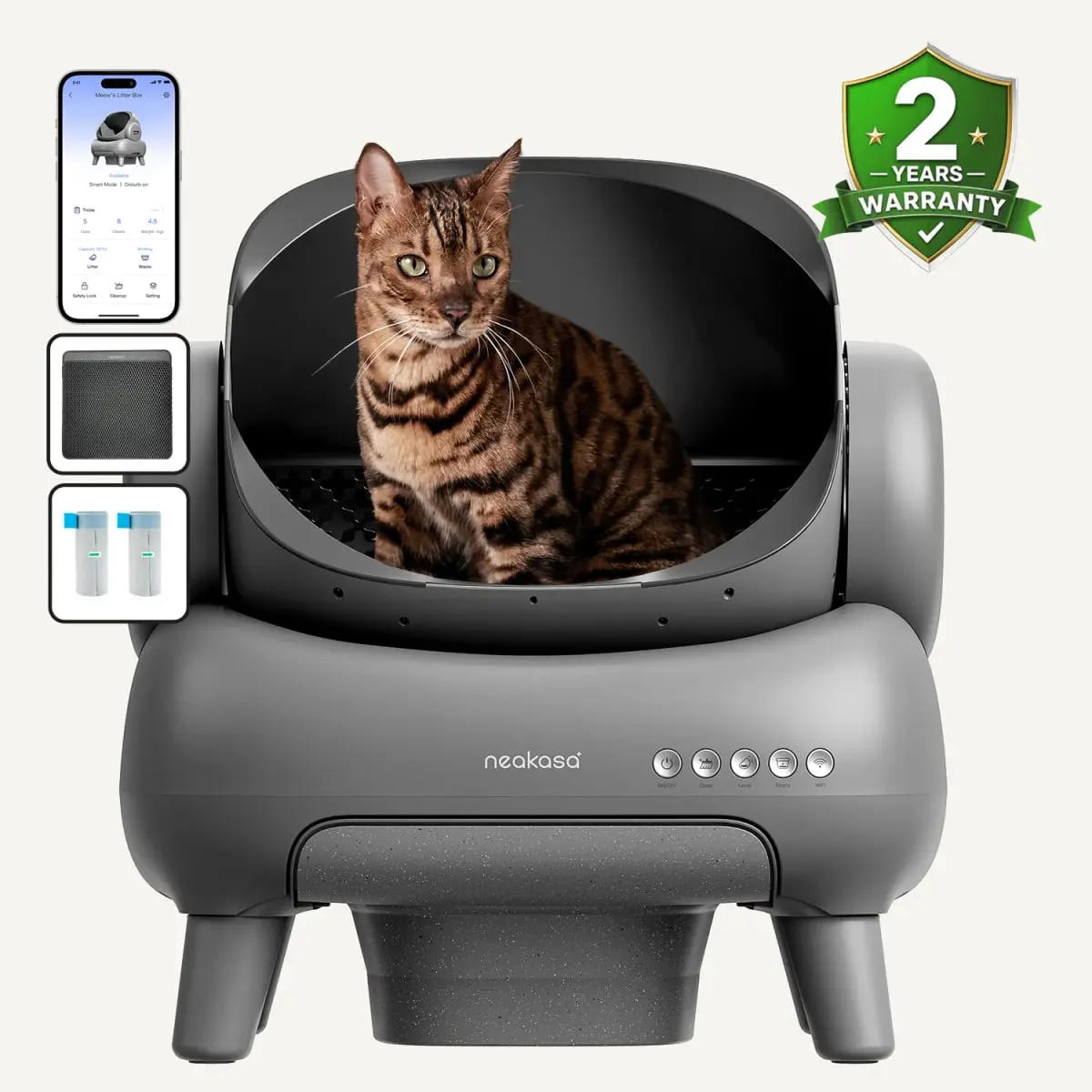
The Neakasa M1 Plus is the best automatic litter box for most multi-cat homes. Its open-top design has no entrance to close, it is rated for cats up to 33 pounds, and its 11-liter waste bin should last about a week with two cats (our estimate), for around $360 to $400. With three or four cats, or carpet, the roughly $800 Whisker Litter-Robot 5 is the upgrade.
Best value overall Neakasa M1 Plus
Our picks at a glance
- Best value overall Neakasa M1 Plus Two or three cats, including big ones, in a home that uses clumping clay litterCheck price
- Best for two cats Petkit Purobot Max 3 Two small or medium cats, seniors that need a low step, and homes that use tofu litterCheck price
- Best upgrade Whisker Litter-Robot 5 Three to five cats, cats up to 30 pounds, and litter rooms with carpetCheck price
- Most proven design Whisker Litter-Robot 4 Up to four cats on a hard floor, for buyers who want the model with the longest recordCheck price
- Best for look-alike cats Petkit Purobot Max Pro 2 Homes where two cats weigh about the same and a scale alone cannot tell them apartCheck price
What is in this guide
- The best automatic litter boxes for multiple cats
- 1. Neakasa M1 Plus
- 2. Petkit Purobot Max 3
- 3. Whisker Litter-Robot 5
- 4. Whisker Litter-Robot 4
- 5. Petkit Purobot Max Pro 2
- What to look for in an automatic litter box for multiple cats
- Does one automatic box replace several?
- Waste capacity in days, per cat
- What makes an automatic litter box safe?
- Automatic litter box for large cats
- Cycle timing, litter, and running costs
- How we chose these automatic litter boxes
- Which one should you buy?
A second cat cuts every drawer promise in half, which is why the best automatic litter box for multiple cats is the Neakasa M1 Plus. Its 11.2-liter waste bin is the largest of any box here that publishes a figure, its open-top design has no entrance to close on a cat, and it is rated for cats up to 33 pounds, all for around $360 to $400.
The catch is the climb. The entry height is 13.86 inches, and the ramp that fixes it is sold separately. It also needs clumping litter, so wood pellets are out.
If your cats are small, or one of them is old enough to resent stairs, the Petkit Purobot Max 3 costs about the same and has an 8-inch entrance height. And if you have three or four cats, or a 25-pound Maine Coon, the Whisker Litter-Robot 5 earns its roughly $800 price.
The best automatic litter boxes for multiple cats
1. Neakasa M1 Plus
Neakasa M1 Plus
Best for: Two or three cats, including big ones, in a home that uses clumping clay litter
- Waste bin
- 11.2 liters (est. 7 days for two cats)
- Cat weight range
- 2.2 to 33 lb
- Entrance
- Open top, no closing entrance
- Safety sensors
- 6 infrared sets plus 4 weight sensors
- Litter
- Clumping or scoopable litter
- Warranty
- 2 years
Usually around $360 to $400
What we like
- Open-top design means there is no entrance to close during cleaning
- 33 lb weight limit is the highest of our five picks
- Any trash bag that fits the drawer works, so there are no proprietary refills
- Neakasa says the box pauses when a cat enters or touches it
What to know
- Entry height is 13.86 inches and the ramp step costs extra
- Open top lets enthusiastic diggers throw litter out, with no hood to hold in smell
Most self-cleaning boxes are closed drums with a porthole. The M1 Plus is a tilted, open-top bowl that rolls backward to sift, so there is no entrance to close mid-cycle. In a house where a second cat may wander up while the first is still inside, that removes the biggest danger of a closing drum.
Neakasa also lists six sets of infrared sensors (invisible light beams that notice a cat crossing them) and four weight sensors, and says the box pauses when a cat enters or touches it.
Neakasa claims up to 14 days for one cat from the 11.2-liter bin, which works out to about a week for two cats and four or five days for three (our estimate). Any trash bag that fits the drawer will do, and Neakasa’s own run about $20 for two rolls.
The complaint with any open top is mess. Enthusiastic diggers fling litter over the rim, and nothing hoods the smell.
Skip it if a senior cat or kitten cannot manage that 13.86-inch entry, or budget another $45 to $70 for the ramp. For three or four cats, a second M1 Plus from Neakasa’s own store is a real alternative to one Litter-Robot 5, and it gives you a spare when one box pauses.
2. Petkit Purobot Max 3
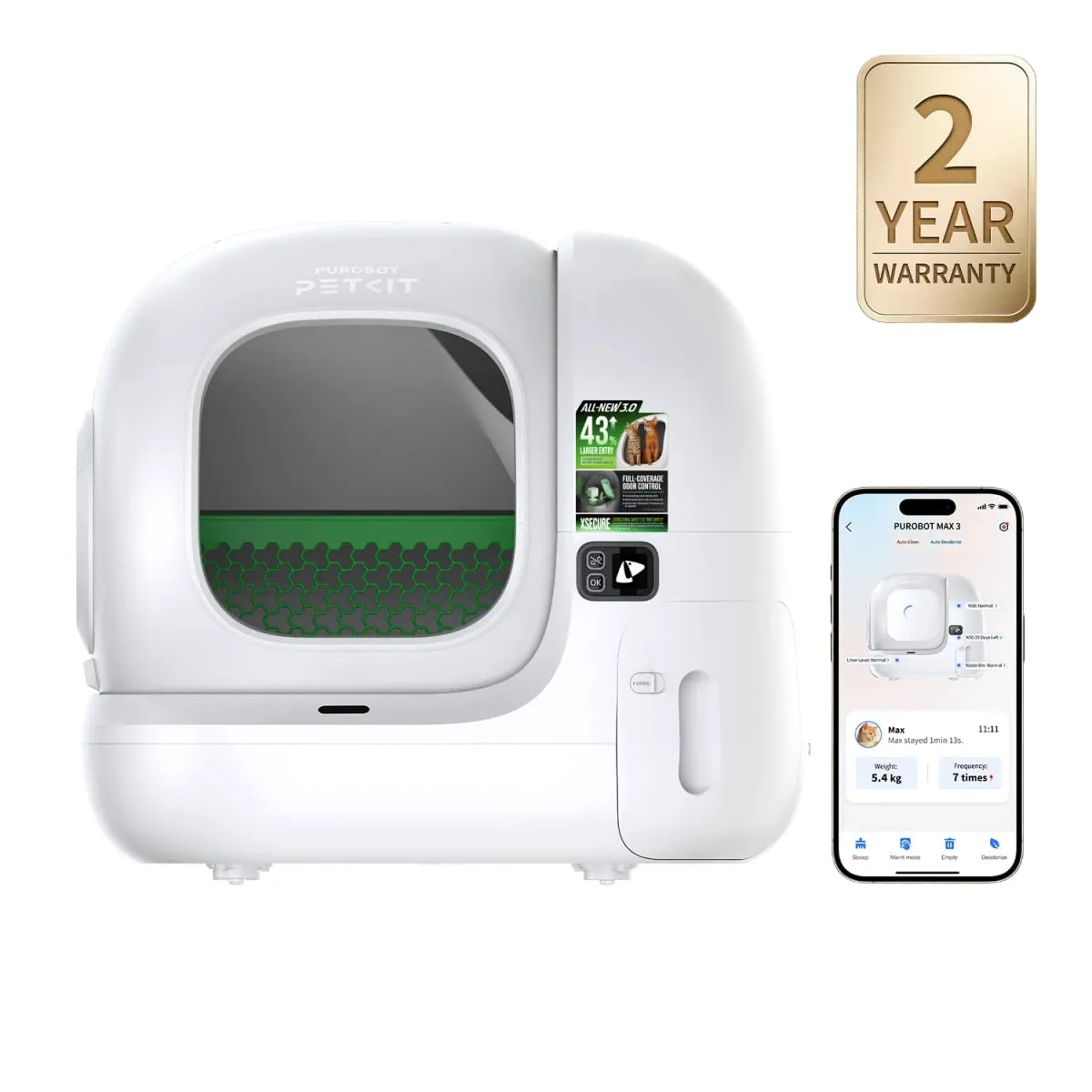
Petkit Purobot Max 3
Best for: Two small or medium cats, seniors that need a low step, and homes that use tofu litter
- Waste bin
- 7 liters (est. 4 to 5 days for two cats)
- Cat weight range
- 3.3 to 22 lb (cats 6 months and older)
- Entrance
- 8.03 inch entrance height
- Safety sensors
- 12 sensors plus anti-pinch structure
- Litter
- Clumping clay, tofu, and mixed litters
Usually around $400
What we like
- 8.03 inch entrance height is the lowest published here, which helps older cats
- Takes clumping clay, tofu, and mixed litters, which neither Litter-Robot accepts
- Petkit describes an anti-pinch structure that keeps an opening even without power
- Petkit lists noise at under 35 dB
What to know
- 22 lb limit and enclosed drum rule out large breeds
- 7 liter bin is the smallest here, so three cats fill it in about 3 days
- A recent model, so there is little long-term owner record yet
The Purobot Max 3 is a Petkit drum with a list price of $500 that usually sells for around $400. It takes clumping clay, tofu, and mixed litters, and tofu is something both Litter-Robots refuse.
Petkit says twelve sensors track movement and weight and pause the cylinder when a cat is inside. It also describes an anti-pinch structure that keeps a permanent opening, so a cat can leave even without power or sensors. That is Petkit’s description, so read the manual before you rely on it.
Be skeptical of the 15-day claim, which Petkit makes for a single-cat home. A 7-liter bin over 15 days implies far less waste per cat than the yardstick used here. By that yardstick, expect about nine days for one cat, four or five for two, and three for three.
It is also a recent model, so owner feedback over years is thin. Treat reliability as unproven.
Skip it if any cat tops 22 pounds or dislikes enclosed spaces. The M1 Plus suits those cats better.
3. Whisker Litter-Robot 5
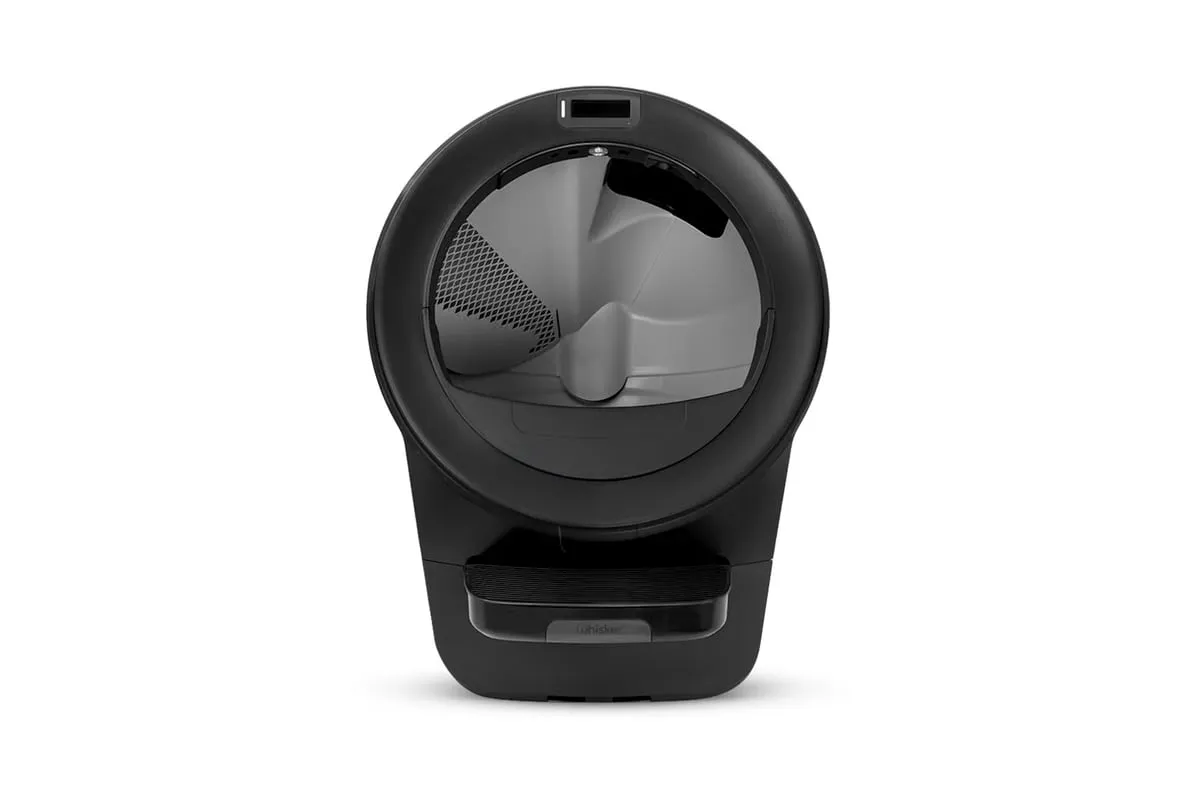
Whisker Litter-Robot 5
Best for: Three to five cats, cats up to 30 pounds, and litter rooms with carpet
- Rated for
- Up to 5 cats
- Waste drawer
- About 10 days for one cat (est. 5 for two)
- Cat weight range
- 3 to 30 lb
- Entrance
- 15.75 x 15.75 inches
- Safety sensors
- Multiple lasers plus weight sensors
- Trial and warranty
- 90 days, 1 year
Usually around $800
What we like
- Rated by Whisker for up to five cats from 3 to 30 lb
- 15.75 inch entrance and 17.5 inch interior height fit large breeds
- Tells urine from solids and times the cleaning cycle to suit
- Carpet tray is built in, so the scale works on any floor
What to know
- Costs about twice as much as our top pick
- Plant-based litters are not supported
- Some app features need a paid Whisker+ membership
Here is what the extra $400 buys. Whisker rates the Litter-Robot 5 for up to five cats from 3 to 30 pounds, with a 15.75-inch square entrance and 17.5 inches of headroom inside. It is the roomiest enclosed box here, and Whisker’s own comparison shows it also gained a built-in carpet tray, so the scale reads correctly on any floor.
A feature Whisker calls WasteID tells urine from solids. Solids get cycled away quickly to contain the smell, while urine gets a few minutes to clump first. Cat detection relies on multiple lasers plus weight sensors, and Whisker says kittens under 3 pounds should use semi-automatic mode instead of automatic.
Whisker’s drawer figures are the most modest on this list, and we suspect the most honest: about 10 days for one cat. That means about five days for two, a little over three for three, and two or three for four cats.
The catches are price and litter. Plant-based litters are out, and some app features need a paid Whisker+ membership. The camera-equipped 5 Pro costs more still, and we’d only pay that if you need a camera to tell your cats apart.
Skip it if you have two average cats and hard floors. The M1 Plus does that job for half the money. But the best automatic litter box for 3 cats or more, with no second unit, is this one. Whisker also offers a 90-day in-home trial, which matters with cats (famously open-minded about change).
4. Whisker Litter-Robot 4
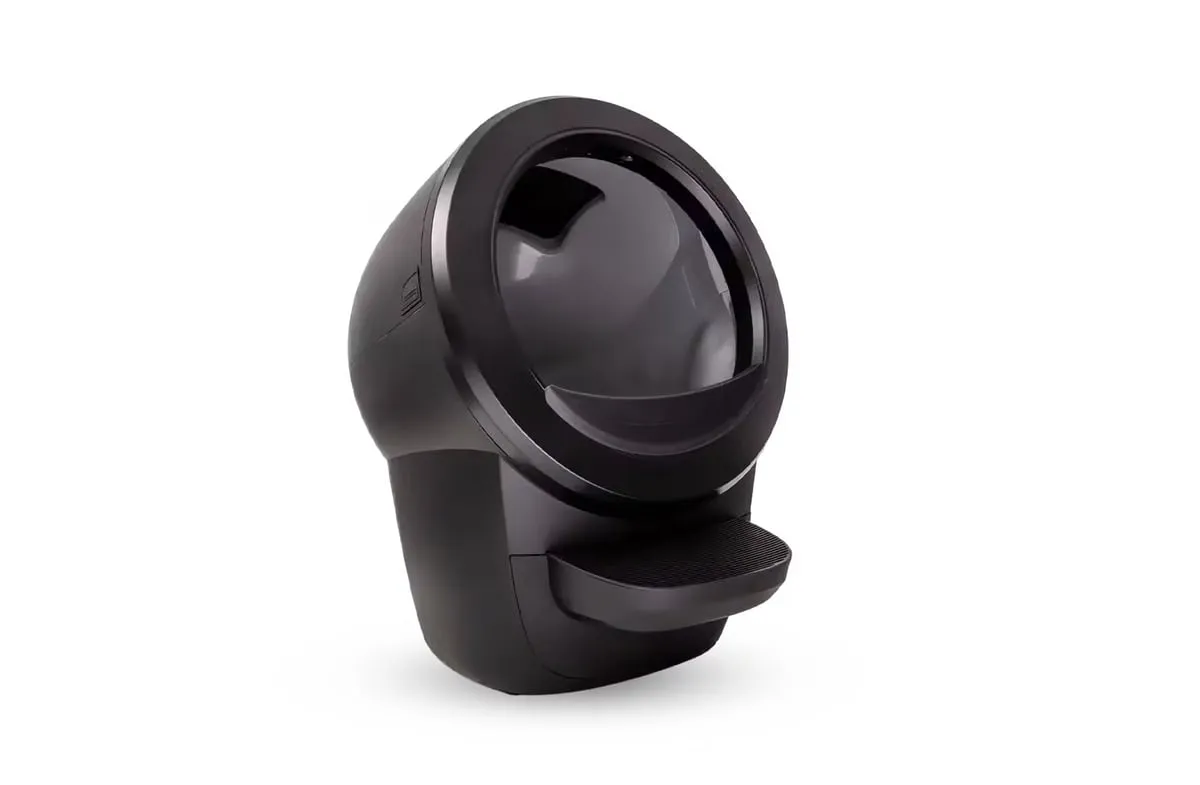
Whisker Litter-Robot 4
Best for: Up to four cats on a hard floor, for buyers who want the model with the longest record
- Rated for
- Up to 4 cats
- Waste drawer
- About 8 days for one cat (est. 4 for two)
- Cat weight range
- 3 to 25 lb
- Entrance
- 15.75 x 15.75 inches
- Safety sensors
- Laser and weight sensors, plus anti-pinch sensors
- Trial and warranty
- 90 days, 1 year
Usually around $700
What we like
- More than 14,000 owner reviews on Whisker's own store, averaging 4.5 out of 5
- Laser and weight sensors, plus anti-pinch sensors that stop and retract the globe, per Whisker's manual
- Takes a regular trash bag and any clumping clay litter
What to know
- Only about $100 less than the newer Litter-Robot 5
- Needs an add-on tray before the scale works on carpet
- 25 lb limit is 5 lb lower than the 5
The Litter-Robot 4 is still on sale at about $700. Its appeal now is the paper trail: more than 14,000 owner reviews on Whisker’s own store, averaging 4.5 out of 5.
Its safety setup is well documented. Whisker’s manual describes laser and weight sensors that stop the globe if a cat enters mid-cycle, plus anti-pinch sensors that stop and retract it if something gets caught.
For multiple cats, the numbers trail the 5 slightly. It is rated for four cats instead of five and 25 pounds instead of 30. Whisker’s drawer estimate is eight days for one cat, so about four for two and under three for three.
The known weak point is sensor fussiness. Owners often mention fault alerts that pause the box until the sensors are wiped or the unit is restarted, which matters more when four cats are waiting. On carpet you also need an add-on tray before the scale reads properly.
Skip it at full price, honestly. With only $100 between them, the 5 is the better buy. The 4 makes sense when a sale opens that gap to $200 or more.
5. Petkit Purobot Max Pro 2
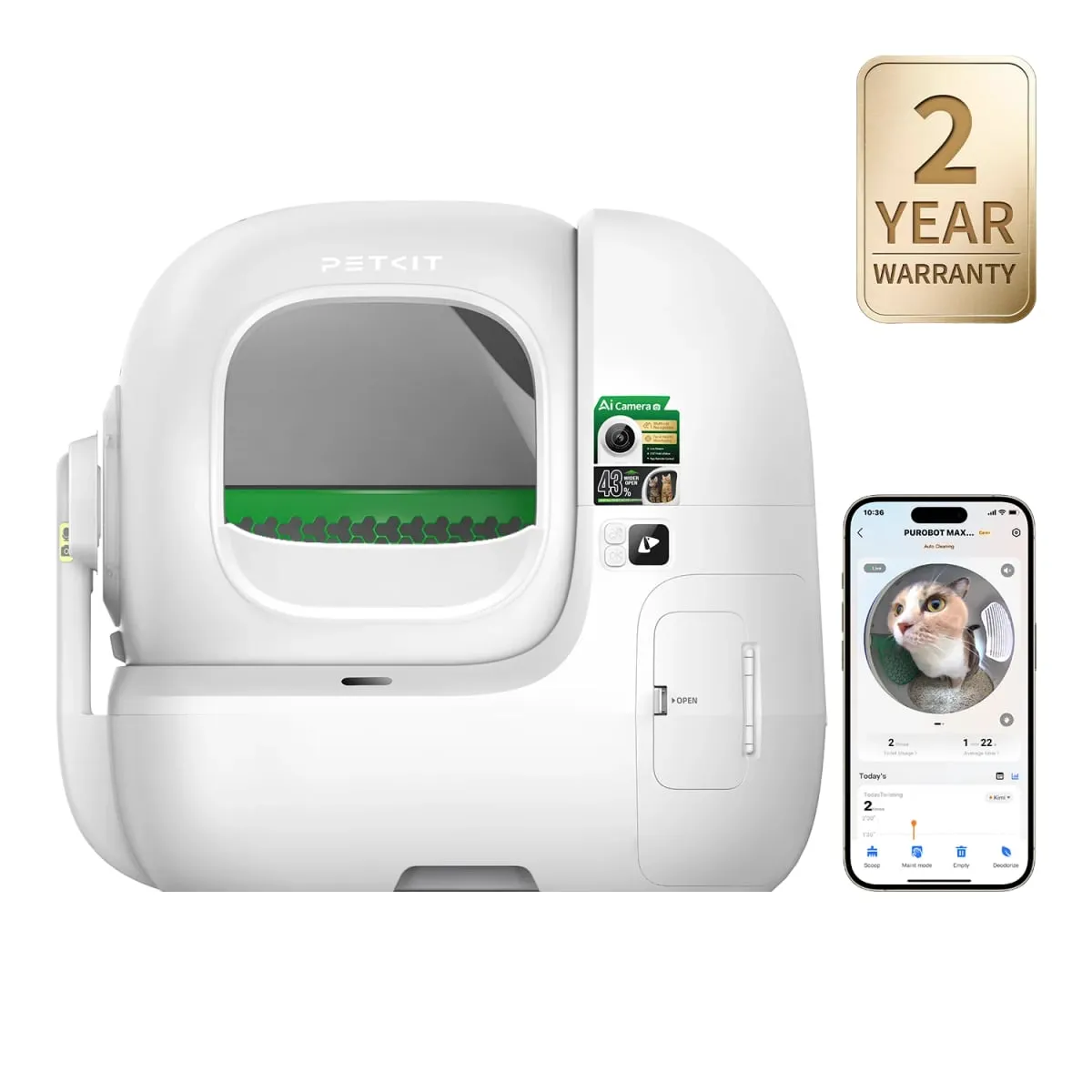
Petkit Purobot Max Pro 2
Best for: Homes where two cats weigh about the same and a scale alone cannot tell them apart
- Waste bin
- 8 liters (est. 5 days for two cats)
- Cat weight range
- 3.3 to 22 lb
- Entrance
- 10.51 x 10.74 inches
- Safety sensors
- 12 sensors, anti-pinch entrance
- Cat ID
- Camera face recognition plus weight
Usually around $450 to $500
What we like
- Camera identifies each cat by face, so two 10 lb cats get separate records
- 8 liter bin with a drawstring bag system
- 12 sensors and a patented anti-pinch entrance, per Petkit
What to know
- 10.5 inch entrance is about two-thirds the width of a Litter-Robot's
- 22 lb limit, same as the cheaper Max 3
- A camera inside a litter box is not everyone's idea of home decor
Every box here tells cats apart by weight. That works nicely for a 9-pound tabby and a 15-pound tomcat, and not at all for littermates who weigh the same. The Max Pro 2 adds a camera aimed into the drum that recognizes each cat’s face, so two look-alikes on the scale still get separate records.
The records are the health feature. More trips than usual, or a slow slide in weight, are early signs that are nearly impossible to pin on the right cat when three share a box.
The bin is a step up from the Max 3 at 8 liters, and Petkit lists 12 sensors plus an anti-pinch entrance. By our yardstick, expect about five days between bag changes with two cats and three or four days with three.
The drawbacks are size and squeamishness. The entrance measures 10.51 by 10.74 inches, roughly two-thirds the width of a Litter-Robot’s, and the limit is 22 pounds. The camera also means photos of your cat’s output in an app (a sentence we did not expect to write).
At around $450 to $500, it costs up to $100 more than the Max 3. Skip it if your cats differ by a few pounds, since the cheaper boxes can already tell them apart. For big look-alike cats, the Litter-Robot 5 Pro is the roomier camera option at a much higher price.
What to look for in an automatic litter box for multiple cats
Does one automatic box replace several?
Not entirely. Common veterinary guidance is one litter box per cat, plus one, which Ohio State’s Indoor Pet Initiative calls its Golden Rule. A self-cleaning litter box for multiple cats solves the dirty-box half of that rule, because the litter is fresh for each visit. It does nothing for the territory half. A cat that guards the box, or refuses to share, still needs somewhere else to go.
Our advice: for two cats that get along, pair one automatic box with a plain $20 backup. For three or four, buy two automatic boxes or keep two regular ones. The backup also covers the day a sensor fault pauses the robot.
Waste capacity in days, per cat
Ignore the single-cat figure on the box and divide. Neakasa’s figures imply roughly 0.8 liter of waste per cat per day, so we use three-quarters of a liter as a yardstick for every box. A 7-liter bin then lasts two cats under five days, and an 11-liter bin about a week. With three cats, plan on emptying any of these every three to five days. These are estimates, not promises. A robot vacuum that handles pet hair can at least deal with the tracked litter.
What makes an automatic litter box safe?
Reports have surfaced of cats trapped and killed in generic rotating-drum boxes sold online under several brand names. One pet insurer’s write-up described a drum whose entrance closed completely during the cleaning cycle, leaving a cat in the opening no way out if the sensors failed. It also noted that no official recall had been issued.
Look for four things:
- An entrance designed to stay open. An open top, or a drum built to keep an opening.
- Weight sensors designed to stop the cycle when a cat steps in, with a published minimum weight. Kittens under that minimum (3 pounds for Whisker, 3.3 for Petkit, 2.2 for Neakasa) should not use automatic mode.
- Anti-pinch detection designed to halt or reverse the motor when it meets resistance.
- A named maker with a manual, a warranty, and US support.
No design is a guarantee. Supervise the first several days with each cat, follow the manufacturer’s minimum weight, and read the manual’s safety section before you switch on automatic mode.
A check of the CPSC recalls page on November 20, 2026 turned up no recall for litter boxes from Whisker, Petkit, or Neakasa. Treat that as a minimum, not a guarantee, because the agency’s recalls mostly concern hazards to people.
Automatic litter box for large cats
A weight limit is not the same as a comfortable fit. Ohio State’s guidance is that a litter box should be large enough for a cat to stand on all fours and turn around. For a cat over 20 pounds, that points to the open-top Neakasa (33-pound limit) or the Litter-Robot 5 (30 pounds, 15.75-inch entrance). The Petkit drums stop at 22 pounds and have roughly 10.5-inch entrances.
Cycle timing, litter, and running costs
Self-cleaning boxes wait a few minutes after a cat leaves, and the countdown typically starts over if another cat steps in. In a busy house that delays cleaning, so keep the wait short.
Check litter before you buy. Both Litter-Robots want clumping clay, the Neakasa wants clumping litter and rules out wood pellets, and the Petkits take tofu and clay. Avoid any system built on disposable litter trays, because refills multiply with every cat. None of our picks uses them. Budget for bags, carbon filters or odor cartridges, and possibly an app membership. If smell is still winning, an air purifier built for litter odor helps more than a scented filter.
| Box | Waste bin | Two cats | Three cats | Four cats | Weight range | Entrance |
|---|---|---|---|---|---|---|
| Neakasa M1 Plus | 11.2 L | About 7 days | 4 to 5 days | About 4 days | 2.2 to 33 lb | Open top |
| Petkit Purobot Max 3 | 7 L | 4 to 5 days | About 3 days | About 2 days | 3.3 to 22 lb | 8.03 in entrance height |
| Whisker Litter-Robot 5 | Not published | About 5 days | About 3 days | 2 to 3 days | 3 to 30 lb | 15.75 in square |
| Whisker Litter-Robot 4 | Not published | About 4 days | Under 3 days | About 2 days | 3 to 25 lb | 15.75 in square |
| Petkit Purobot Max Pro 2 | 8 L | About 5 days | 3 to 4 days | About 3 days | 3.3 to 22 lb | 10.5 in wide |
The day counts are our estimates, worked from each maker’s published figures. Cats vary, and so does litter.
How we chose these automatic litter boxes
We started with safety. A box had to come from a named maker, document an entrance that stays open or sensors that stop the drum, and have no recall we could find. Unbranded rotating-drum boxes never made the long list.
Then we redid each maker’s capacity claim for two, three, and four cats, checked manufacturer pages for weight minimums and litter restrictions, and weighed patterns in long-term owner feedback alongside running costs and price history. Our general approach is on the how we pick page.
Which one should you buy?
If you have two or three cats and use clay litter, get the Neakasa M1 Plus, and add the ramp if anyone in the house is past their jumping years.
If your cats are small, old, or committed to tofu litter, get the Petkit Purobot Max 3. If two of them weigh the same and you want to know which one is visiting six times a day, pay the extra for the Max Pro 2.
If you have three or more cats, a cat over 22 pounds, or carpet, the Litter-Robot 5 is worth the money. Buy the Litter-Robot 4 only when a sale drops it well under $700.
If your budget stops at $250, skip no-name drums in that price range, since they are the boxes tied to the reported cat deaths. Two large plain boxes and a good scoop cost about $50.
No cat has ever complained about the lack of an app.
More buying guides
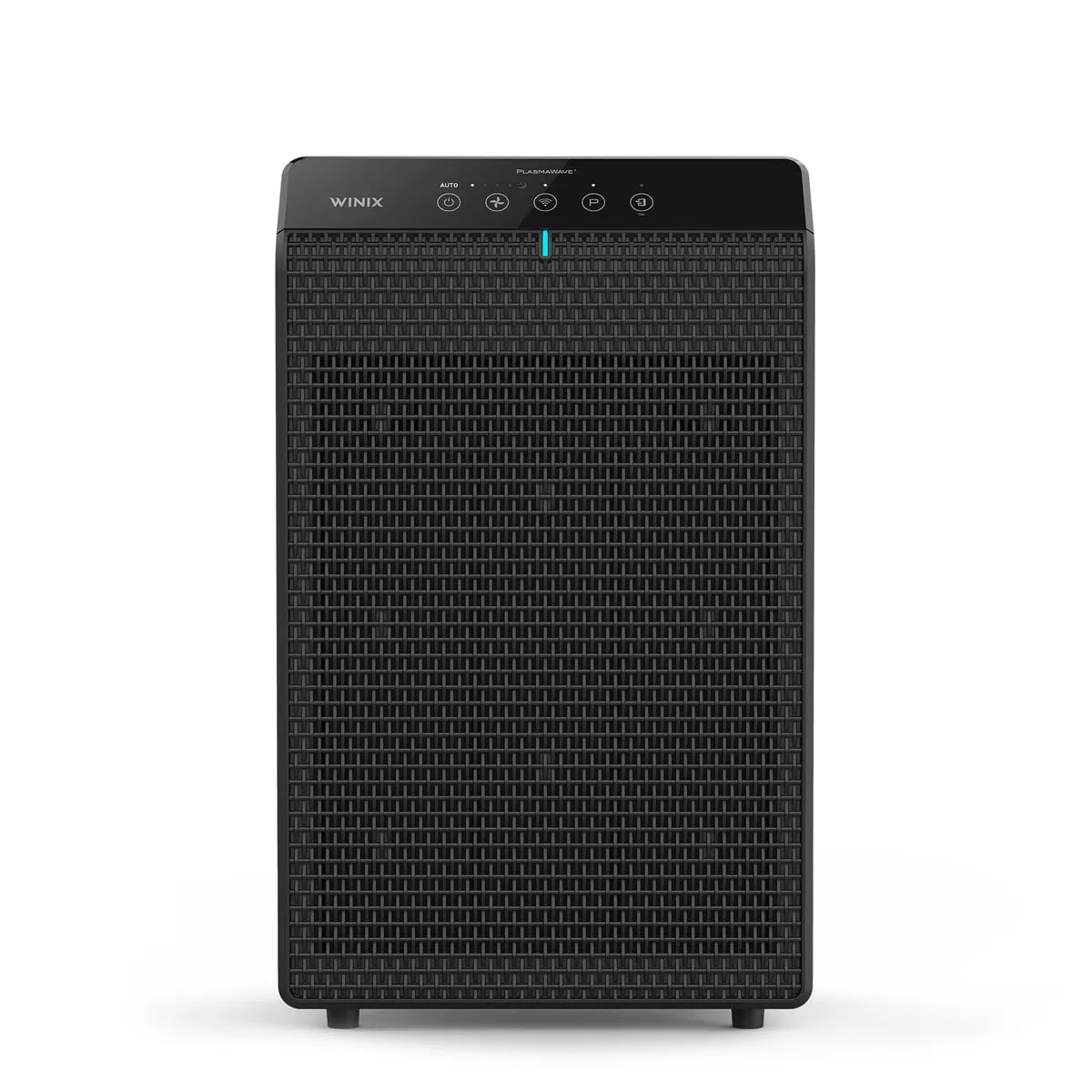
Best air purifier for cat litter smell in 2026: six machines ranked by how much carbon they actually carry
A HEPA filter catches litter dust. Only carbon catches the smell, and most purifiers carry about a handful of it.
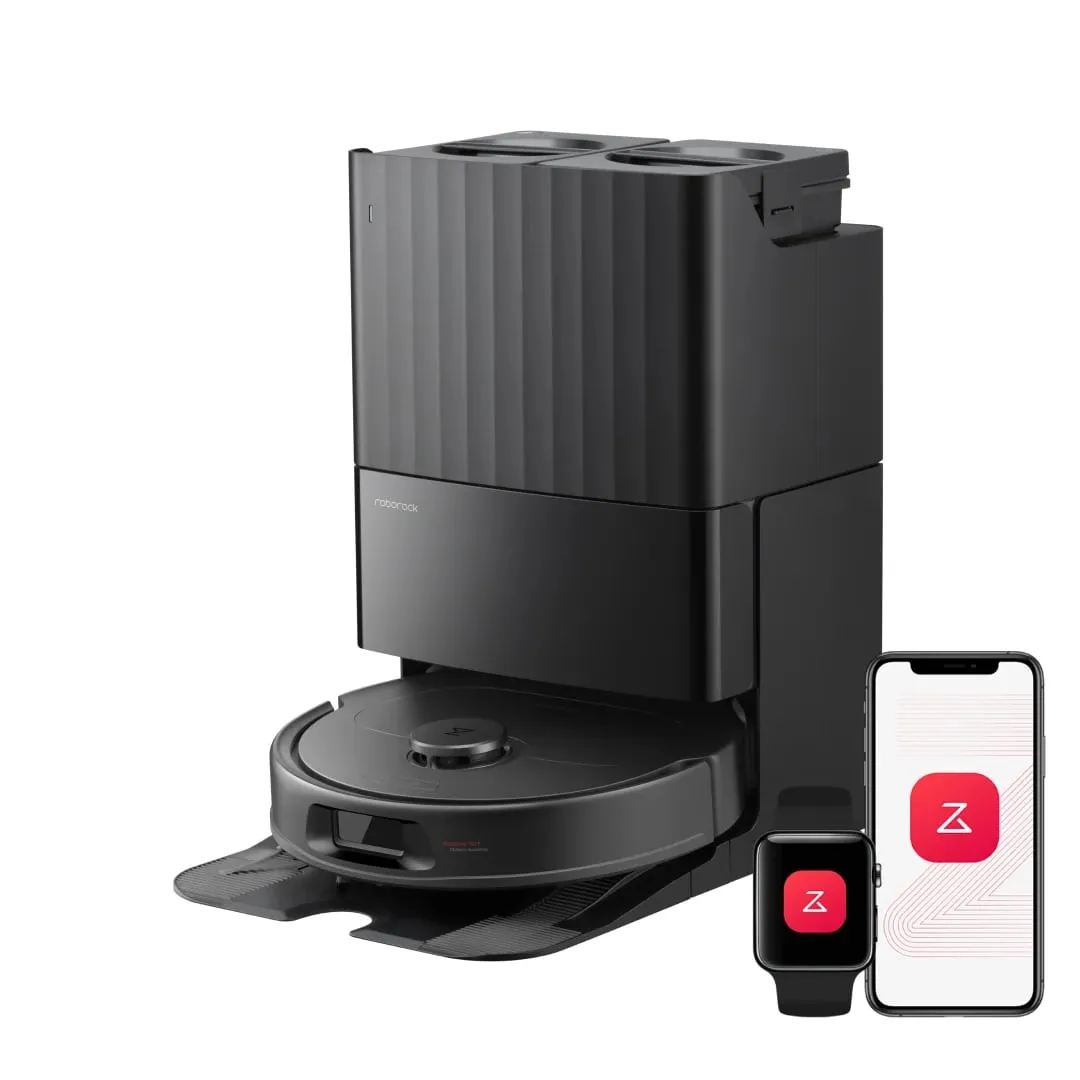
Best robot vacuum for pet hair on hardwood floors in 2026: five that round up the tumbleweeds instead of chasing them
On bare floors, pet hair drifts, hides under the couch, and wraps around anything that spins. These robots are built for that, and the best value has a suction number that looks almost embarrassing.
Best security camera without subscription in 2026: six picks that never send you a monthly bill
A cheap camera with a monthly plan is a rental. These six record to a card, a hub, or a recorder you own, and the fine print holds up.